Why is broiler intestinal health the key to reducing gut disorders in poultry production?
Maintaining good intestinal health is important in transforming feed into meat and protecting farmers’ margins
When broiler intestinal health fails, so does performance!
Margins are tight. Pressure is high.Chicken meat has become one of the most sustainable types of animal protein, thanks to exceptional production efficiency. Broilers require less feed, land, and water per kilogram of meat compared to other livestock, making the industry both profitable and resource-efficient.
Yes, despite these advantages, modern poultry production faces razor-thin margins and growing challenges. Intestinal health disorders such as coccidiosis and dysbiosis remain major threats, driving down growth and feed efficiency while increasing costs. The reduction in routine antibiotic use has further exposed flocks to enteric diseases and bacterial overgrowth, including necrotic enteritis.
To protect intestinal health, producers are adopting comprehensive strategies: stronger biosecurity, targeted vaccination, precision nutrition, and functional feed supplements. Regular monitoring of gut health indicators allow for timely intervention – ensuring broiler performance, profitability, and long-term sustainability without overreliance on antibiotics.
New challenges in broiler production: managing intestinal health without antibiotics
The reduction or complete ban on antimicrobial use in poultry production has led to re-emergence of diseases and conditions that were once rare or overlooked.
In broilers, the majority of these challenges are linked to intestinal health, with disruptions in gut balance driving significant performance and welfare issues. Today, around 60% of therapeutic antibiotic use in broilers is still tied to the management of intestinal disorders – highlighting the critical need for alternative strategies to safeguard gut integrity and maintain productivity.
The broiler’s digestive system
The avian digestive tract has a distinctive structure that efficiently processes and absorbs nutrients.
Broilers have been genetically selected for high feed intake to support high growth rates, requiring a digestive system
that can effectively handle and absorb large quantities of feed.

The digestive tract consists of
- A crop, a temporary storage pouch for ingested food
- A proventriculus, glandular stomach with acids and enzymes
- A gizzard, a muscular organ for grinding of feed
- Small intestine (1.1-1.8 meters) for enzymatic digestion and nutrient absorption
- A particular large intestine (10-15 centimeters) composed of 2 blind sacs, the ceaca for fiber fermentation, and a colon for water reabsorption
- A cloaca: The common external opening for the digestive, urinary, and reproductive tracts, through which waste is eliminated via the vent
- A diverse gut microbiome dominated by Firmicutes, Bacteroidetes, Proteobacteria, and Actinobacteria phyla
The signs of poor intestinal health in broilers
Monitoring broiler gut health is essential for maintaining flock performance and welfare.
Early signs of intestinal problems can be identified during routine poultry house inspections by closely assessing litter quality, droppings, and footpads. These indicators provide valuable insights into the birds’ digestive efficiency, nutrient absorption, and overall intestinal integrity.
Litter quality
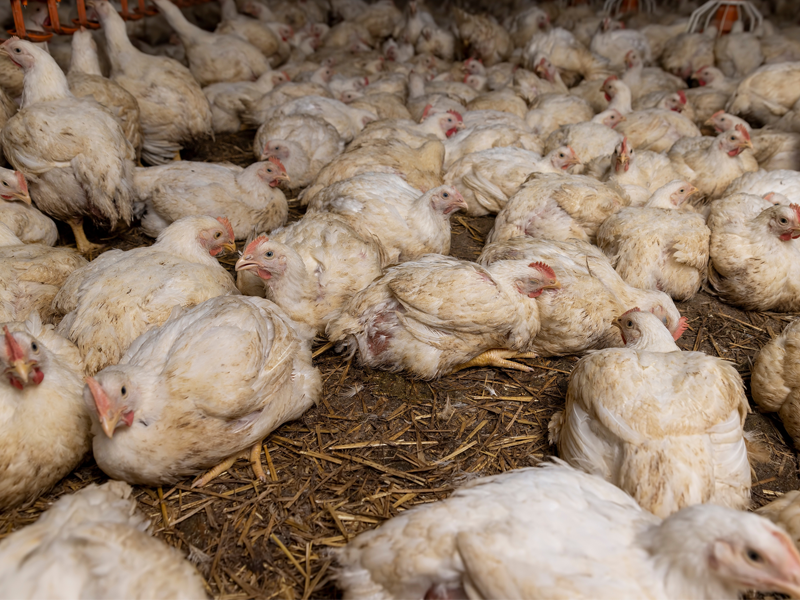
Litter quality directly reflects gut health – wet litter indicates digestive problems. When intestinal function fails, poor water absorption leads to moist litter. Sudden moisture changes often precede more serious gut issues.
Wet litter can quickly propagate disease throughout an entire flock and so requires rapid countermeasures.
Droppings
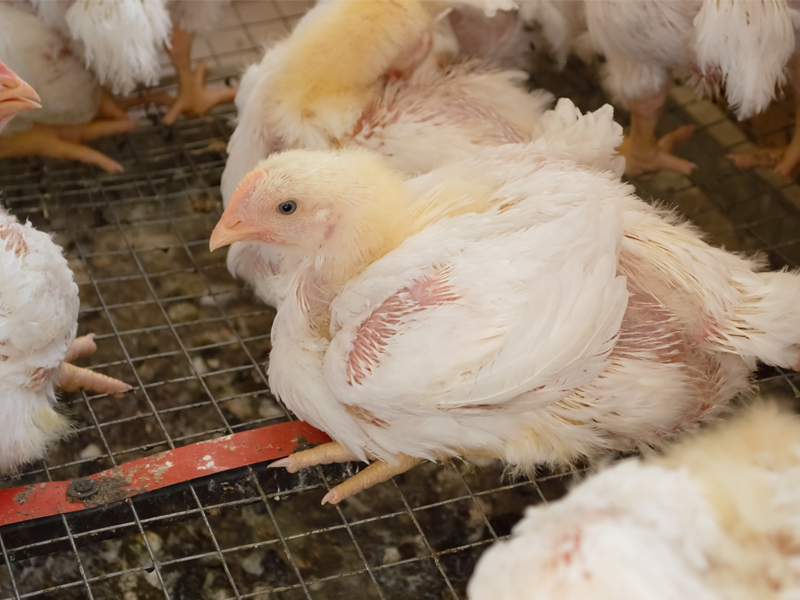
Changes in droppings are one of the most visible signs of compromised broiler gut health. Poor intestinal integrity reduces digestive efficiency, leading to loose, watery, or unevenly formed droppings. Systematic observation and recording of droppings can help identify specific intestinal health issues.

Foodpad lesions
Footpad dermatitis, appearing as lesions on the feet, is a key indicator of gut health issues. These lesions often develop from prolonged contact with wet or soiled litter. The strong correlation between intestinal problems and footpad lesions makes footpad scoring an effective non-invasive monitoring method.
Early intervention prevents further intestinal damage, performance losses, and improves welfare.
Common broiler intestinal diseases and syndromes
Broiler gut health challenges significantly impact performance and profitability. This section covers key intestinal disorders affecting commercial broilers, examining their causes, symptoms, economic impact, and management strategies – critical knowledge for developing effective approaches in production systems with limited antibiotic use.
Gut disorders arise from both infectious and non-infectious sources that often interact. Non-infectious factors can weaken gut barriers, increasing vulnerability to pathogens. Once gut integrity is compromised, harmful microorganisms and their endotoxins can enter the system, triggering inflammation and performance losses.
Non-infectious causes:
- Nutritional factors: sudden diet changes, excessive fermentable carbohydrates, insufficient fiber, or antinutritional compounds
- Feed contaminants e.g. mycotoxins and other harmful substances
- Management stressors: transportation, overcrowding, and environmental conditions such as heat or humidity
- Water quality issues that affect digestion and gut function
Infectious causes of wet litter:
- A diverse range of pathogens affecting different stages of growth
- Age-related susceptibility patterns, with younger birds often more vulnerable
Common pathogens in broiler production include those clinically relevant to birds (coccidiosis, E. coli) and those primarily concerning public health (Salmonella, Campylobacter). Monitoring and managing these pathogens is essential for maintaining broiler intestinal health, flock performance, and food safety.

Impacts of “dysbiosis” on broiler intestinal health
Dysbiosis, also referred to as dysbacteriosis, occurs when the interactions between gut microbiota and the host are impaired to an extent in which gut health becomes suboptimal. All this is probably influenced by nutrition and it is suggested that the altered composition of the gut microbiota induces changes in the gut wall, including morphological changes (villus length decreases, crypt depth increases, epithelial cell damage) and inflammatory reactions (infiltration of immune cells in the wall). The combination of a suboptimal microbiota combined with effects on the gut wall would then most likely interfere with digestive processes, eventually leading to poor performance, and induce enteritis.
Preventing intestinal disorders in broilers
As the poultry industry continues to adapt to reduced antibiotic usage, maintaining optimal intestinal health has become increasingly crucial for sustainable production. The complex interplay between the broiler’s digestive system, its developing microbiome, and various infectious and non-infectious challenges requires a comprehensive management approach.
By understanding the early warning signs of poor gut health and implementing targeted interventions, producers can significantly mitigate the economic impact of intestinal disorders.
Want to know more about this topic? Download our complete insight here.
"*" indicates required fields