Swine Inflammation and Necrosis Syndrome (SINS) in pigs
What is the role of endotoxins?
Author:
V. Van Hamme, Sr. Innovation Manager Intestinal Health Solutions
Swine Inflammation and Necrosis Syndrome (SINS) is an increasingly recognized health condition in pig production that causes inflammatory and necrotic lesions in several body regions, including the tail, ears, teats, and claws. These lesions can negatively affect animal welfare, growth performance, and overall herd productivity.
Recent research suggests that SINS is not simply the result of external injuries such as tail biting or poor housing conditions. Instead, it appears to be a multifactorial syndrome involving systemic inflammation, intestinal health, and vascular dysfunction.
One important driver of this inflammatory process are endotoxins, particularly lipopolysaccharides (LPS) coming from Gram-negative bacteria in the intestinal tract. When intestinal barrier integrity is compromised, endotoxins can enter the bloodstream and trigger systemic immune responses that contribute to the development of SINS lesions.
Understanding the biological mechanisms behind endotoxin-induced inflammation provides important insights into prevention strategies for modern pig production systems.
Key insight
• Swine Inflammation and Necrosis Syndrome (SINS) is associated with systemic inflammatory processes rather than only external injuries.
• Endotoxins such as lipopolysaccharides (LPS) from Gram-negative bacteria can trigger strong immune responses in pigs.
• Damage to the intestinal barrier allows endotoxins to enter the bloodstream and stimulate inflammation.
• Vascular damage and reduced blood flow to peripheral tissues can lead to necrotic lesions in the tail, ears, and claws.
• Prevention strategies focus on gut health, mycotoxin control, and environmental management.
What is Swine Inflammation and Necrosis Syndrome (SINS)?
Swine Inflammation and Necrosis Syndrome (SINS) is a multifactorial inflammatory condition in pigs characterized by lesions affecting multiple peripheral tissues. These lesions typically appear on the tail, ears, claws, coronary band, and teats. These lesions can negatively impact pig welfare, growth performance, and overall herd health.
Historically, these lesions were often attributed to behavioral issues such as tail biting or mechanical injuries. However, increasing scientific evidence indicates that systemic inflammatory processes are a key underlying factor.
Research has shown that inflammatory mediators circulating in the bloodstream can damage small blood vessels in peripheral tissues. When blood flow becomes compromised, tissues may receive insufficient oxygen, which can ultimately lead to ischemia and necrosis.
Because extremities rely on small blood vessels for oxygen supply, they are often the first areas where visible lesions develop.

What are endotoxins?
Endotoxins are structural components of the outer membrane of Gram-negative bacteria. The most important endotoxin in animal health is lipopolysaccharide (LPS), a molecule capable of triggering strong immune responses in mammals.
When LPS molecules are detected by the immune system, they can trigger powerful inflammatory responses designed to protect the body from bacterial infection.
Structure of lipopolysaccharides (LPS)
LPS molecules are composed of three main structural regions (figure 1):
1. Lipid A
Lipid A anchors the LPS molecule to the bacterial membrane and represents the biologically active endotoxin component. It is recognized by the pig’s immune system through Toll-Like Receptor 4 (TLR4) (figure 2), which initiates inflammatory signaling pathways.
Activation of TLR4 can stimulate the release of pro-inflammatory cytokines, including:
• Tumor Necrosis Factor-α (TNF-α)
• Interleukin-1β (IL-1β)
• Interleukin-6 (IL-6)
• Interleukin-8 (IL-8)
While this immune response is essential for defending against bacterial infection, excessive activation can lead to systemic inflammation and tissue damage.
2. Core oligosaccharide
The core oligosaccharide is a short carbohydrate chain attached to Lipid A. It contains unusual sugars that help stabilize the bacterial outer membrane and contributes to the structural integrity of the endotoxin molecule.
3. O-antigen (O-polysaccharide)
The O-antigen is a long repeating polysaccharide chain that extends outward from the bacterial surface. Its structure varies widely between bacterial strains and plays an important role in immune recognition and bacterial survival.
Sources of endotoxins in pig production
Endotoxins are naturally present in pig production systems because Gram-negative bacteria are a normal component of the intestinal microbiota.
Under healthy conditions, endotoxins remain confined within the intestinal lumen and do not trigger systemic inflammation. This containment depends largely on a strong and intact intestinal barrier.
Several factors can compromise intestinal barrier integrity, including:
– Dietary imbalances – Mycotoxin contamination
– Heat stress – Rapid growth phases
– Weaning stress – Poor water or feed hygiene
When the intestinal barrier becomes impaired, endotoxins may translocate across the gut wall and enter the bloodstream.
How endotoxins contribute to SINS development?
The development of SINS associated with endotoxin exposure generally follows a biological cascade involving intestinal barrier disruption, immune activation, and vascular damage.
Intestinal barrier disruption
The intestinal epithelium normally acts as a protective barrier preventing bacterial toxins from entering the bloodstream.
When this barrier becomes weakened, LPS molecules can translocate across the intestinal wall and enter circulation. This process is often described as endotoxemia, where low concentrations of endotoxin circulate systemically and stimulate chronic inflammation.
Immune system activation
Once endotoxins enter the bloodstream, they activate immune signaling pathways through TLR4 receptors on immune cells.
This activation stimulates the release of inflammatory mediators such as TNF-α, IL-1β, IL-6, and IL-8. These cytokines trigger multiple immune responses, including:
- Activation of immune cells such as macrophages and neutrophils
- Stimulation of the complement system
- Amplification of inflammatory signaling pathways
This immune cascade can lead to a systemic inflammatory state affecting multiple tissues.
Vascular inflammation and reduced blood flow
Inflammatory mediators can damage the endothelium, the inner lining of blood vessels. This can lead to:
- Vasculitis (inflammation of blood vessels)
- Increased vascular permeability
- Thrombosis (blood clot formation)
These changes reduce blood flow to peripheral tissues. Because extremities rely on small blood vessels, areas such as the tail tip, ears, coronary band, and teats are particularly vulnerable.
Reduced oxygen supply in these tissues may eventually lead to ischemia and necrosis, which produce the characteristic lesions observed in SINS.
What are the primary clinical signs of SINS?
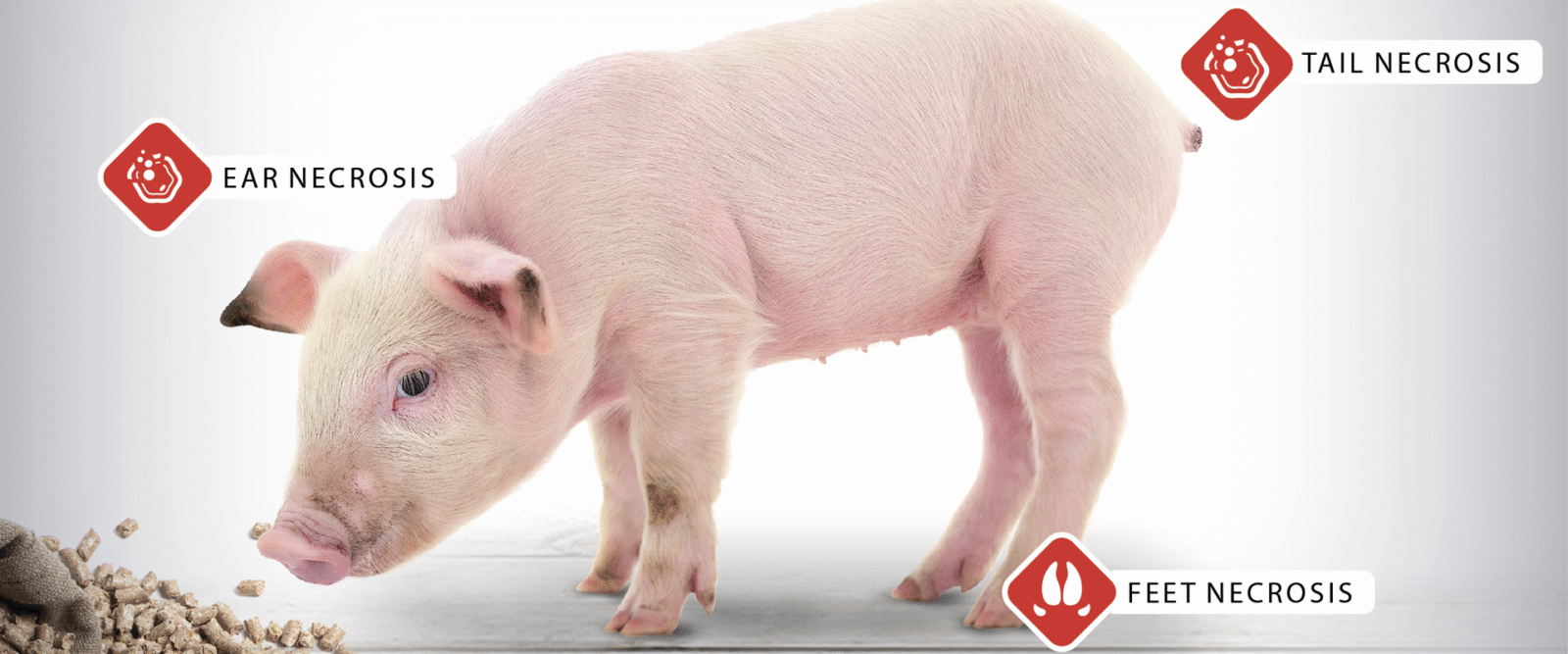
SINS is typically recognized by a pattern of necrotic and inflammatory lesions occurring in multiple regions, not just a single site. Common findings include reddening and swelling that can progress to dark discoloration, crusting, and necrosis of the tail, ears, teats/udder, and claws/coronary band. Depending on age and severity, veterinarians and caretakers may observe:
- Tail base and tail tip changes, including bristle loss, swelling, redness, scabs, rhagades, exudation, and, in some cases, hemorrhage.
- Ear changes, including venous congestion and, in some cases, later necrosis.
- Teat inflammation, scabbing, and necrosis.
- Coronary band and heel lesions, including swelling, redness, exudative inflammation, clefts, and lacerations.
Interestingly, lesions may appear very early in life, sometimes even in neonatal piglets, suggesting that systemic inflammatory mechanisms are involved rather than purely mechanical injuries. The lesions can also vary widely in severity.
Prevention and control strategies
Because LPS-driven inflammation is part of the SINS pathway, prevention should focus upstream by lowering LPS and inflammatory pressure, protecting the gut barrier, and minimizing factors that destabilize perfusion and metabolism, including:
SUPPORTING INTESTINAL HEALTH
Maintaining a strong intestinal barrier is one of the most effective ways to prevent endotoxin translocation.
Key measures include:
-
- providing high-quality, fiber-balanced diets
- ensuring clean drinking water
- avoiding sudden dietary changes
Improving gut health can significantly reduce inflammatory pressure.
MYCOTOXIN CONTROL
Mycotoxins can damage the intestinal epithelial cells and increase the likelihood of endotoxin translocation.
Preventive strategies may include:
-
- regular feed quality monitoring
- implementation of mycotoxin mitigation strategies
- the use of broad-spectrum mycotoxin binders when necessary
ENVIRONMENTAL MANAGEMENT
Environmental stress can exacerbate inflammatory responses and intestinal barrier function.
Important management strategies include:
- maintaining proper stocking density
- ensuring adequate ventilation and temperature control
- reducing social stress within groups
- preserving strict hygiene standards
DIRECT ENDOTOXIN MITIGATION
Specialized feed additives provide a critical line of defense by neutralizing endotoxins within the digestive tract. This targeted approach reduces systemic impact and supports broader strategies for maintaining mucosal health and lowering inflammatory load.
For industry-leading protection, trust EndoBan®, the original pioneer in endotoxin defense. It has been developed to target endotoxins directly within the gastrointestinal tract and reduce their systemic impact.
“Key indicators observed in trials are highlighted on the right.” ➜
EndoBan® in action
Observed outcomes in piglets supplemented with EndoBan®:
- +530 g body weight improvement
- –21 points feed conversion ratio (FCR)
- Lower white blood cell counts
- Reduced neutrophil and monocyte levels
These indicators support the role of targeted endotoxin mitigation as part of an integrated strategy to reduce inflammatory burden and support animal resilience.
To conclude
Growing scientific evidence highlights the important role of endotoxins in the pathogenesis of SINS. When intestinal barrier integrity is compromised, lipopolysaccharides can enter the bloodstream and activate inflammatory pathways that affect vascular function and tissue perfusion.
Because SINS arises from multiple interacting factors, including gut health, environmental stress, nutrition, and microbial exposure, effective prevention requires an integrated management approach.
By prioritizing intestinal integrity, endotoxin mitigation, and optimal husbandry conditions, pig producers and veterinarians can significantly reduce the risk and impact of SINS within modern pig production systems.
References
Reiner G, Kuehling J, Loewenstein F, Lechner M, Becker S. Swine Inflammation and Necrosis Syndrome (SINS). Animals (Basel). 2021 Jun 3;11(6):1670. doi: 10.3390/ani11061670. PMID: 34205208; PMCID: PMC8228460.
Becker S. et al. Inflammation and Necrosis Syndrome in Young Piglets—A Longitudinal Study. Vet. Sci. 2025;12(8):752.
Download the EndoBan® poster
Our full poster, presented at the ESPHM conference in Florence (May 2026), on the effect of EndoBan® on weaner performance, inflammatory status, and SINS associated biomarkers, is now available.
"*" indicates required fields
Frequently asked questions about SINS in pigs
What causes Swine Inflammation and Necrosis Syndrome (SINS) in pigs?
Main causes:
• endotoxin translocation
• intestinal barrier disruption
• systemic inflammation
• vascular damage
Why do SINS lesions appear mainly in the tail and ears?
Peripheral tissues such as the tail and ears rely on small blood vessels for oxygen supply. During systemic inflammation, vascular damage and clot formation can impair blood flow to these areas first, leading to tissue ischemia and necrosis.
How is SINS different from tail biting in pigs?
While tail biting results from behavioral or environmental stress leading to direct injury, SINS is primarily driven by internal inflammatory processes linked to endotoxins and vascular dysfunction. In SINS, lesions often appear in multiple body regions simultaneously, whereas tail biting typically affects the tail only.
Can intestinal health influence the risk of SINS?
Yes. Intestinal barrier integrity plays a critical role in preventing endotoxin translocation into the bloodstream. When gut health is compromised by factors such as stress, poor nutrition, or mycotoxins, endotoxins may cross the intestinal wall and trigger systemic inflammation. Maintaining gut health through balanced diets, good hygiene, and stress reduction can therefore help reduce the risk of SINS.
How can pig producers reduce the risk of SINS?
Reducing the risk of SINS requires a multifactorial prevention strategy, including:
- Supporting intestinal barrier function through balanced nutrition
- Maintaining high standards of hygiene in feed and water systems
- Reducing environmental stress such as overcrowding or heat stress
- Controlling mycotoxin contamination in feed
- Implementing management strategies that reduce endotoxin exposure
These measures can help lower systemic inflammatory pressure and support overall pig health.
Why Lipopolysaccharides trigger strong immune responses?
Lipopolysaccharides are recognized by the immune system as pathogen-associated molecular patterns (PAMPs). When detected by Toll-Like Receptor 4 on immune cells, they activate signaling pathways that rapidly produce inflammatory cytokines. While this mechanism helps protect animals from bacterial infection, excessive activation can lead to systemic inflammation and vascular damage, which are central mechanisms in SINS.
How do endotoxins affect pig health?
Endotoxins such as lipopolysaccharides (LPS) trigger strong immune responses when detected by the pig’s immune system. When LPS enters the bloodstream, it activates Toll-Like Receptor 4 (TLR4) signaling pathways that stimulate the release of inflammatory cytokines including TNF-α, IL-1β, and IL-6. Excessive activation of these inflammatory pathways can contribute to systemic inflammation and vascular damage, which are key mechanisms in the development of SINS.